Algorithmic Oversight in Private Crypto Poker Venues
AI systems now monitor transaction flows and behavioral sequences inside anonymous crypto poker rooms where traditional identity checks do not apply, and operators rely on machine learning models to flag irregular patterns that may indicate collusion or money laundering. These tools process wallet addresses, bet sizing, session timing, and multi-table activity in real time, then generate risk scores that compliance teams review before deciding whether to restrict accounts or report activity to regulators.
Core Components of the Assessment Models
Models begin with graph analysis that maps connections between wallets and playing accounts, while clustering algorithms identify groups that repeatedly enter the same tables at synchronized times. Natural language processing scans chat logs when available, yet most anonymous rooms disable this feature, so behavioral signals carry greater weight. Transaction monitoring layers examine deposit sizes against withdrawal patterns, and velocity checks compare the speed of chip movement across multiple sessions.
One study released in early 2026 by an academic team at the University of Toronto documented how unsupervised learning techniques surfaced previously unknown bot networks operating across three separate crypto poker platforms. The research team tracked 12,000 sessions and reported that 7 percent of high-volume accounts displayed statistically improbable consistency in pre-flop raise frequencies regardless of stack depth or opponent tendencies.
Regulatory Context Across Jurisdictions
Authorities in several regions now require operators to demonstrate that automated systems can detect suspicious activity without relying on personal identifiers. Canada's Financial Transactions and Reports Analysis Centre updated its guidance in August 2026 to include explicit references to on-chain analytics for virtual asset service providers, and similar language appears in draft rules circulated by the Australian Transaction Reports and Analysis Centre. Operators must retain model documentation that explains feature selection and decision thresholds so examiners can verify that scoring does not produce systematic bias against particular wallet clusters.
Industry groups such as the European Gaming and Betting Association have published technical briefs that outline minimum data retention periods and audit trail requirements for these AI tools, and several platforms have begun publishing summary statistics that show how many accounts receive elevated risk scores each month.
Practical Implementation Challenges
Anonymous environments create data sparsity because single players often rotate through multiple wallets, which forces models to rely on indirect signals such as timing correlations and bet-size distributions. False positive rates remain a concern because legitimate high-stakes players can exhibit mechanical betting patterns that resemble automated strategies. Teams therefore combine model output with human review, and thresholds are adjusted quarterly based on feedback from compliance staff who examine flagged cases in detail.
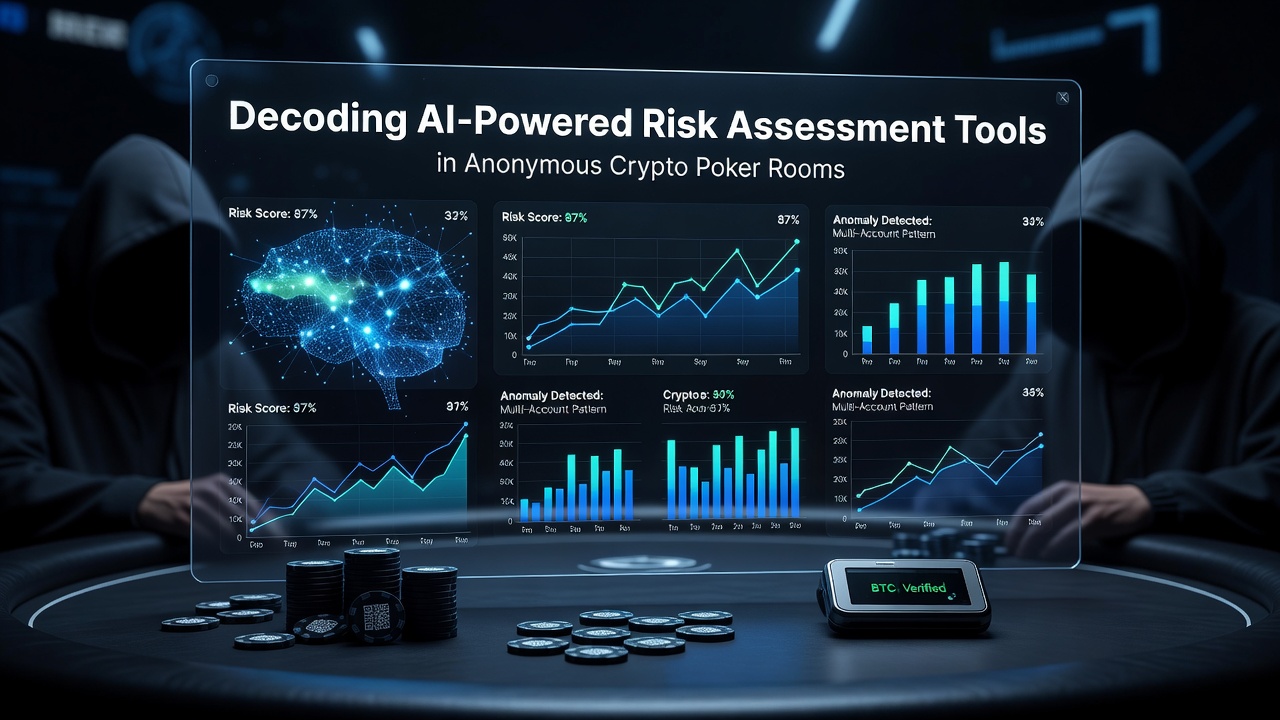
Platform operators report that integration of on-chain data feeds from multiple blockchains has improved detection speed, yet each new chain introduces additional variables that require model retraining. A report issued by the Financial Action Task Force in mid-2026 noted that jurisdictions adopting mandatory model validation protocols saw a measurable increase in the proportion of flagged transactions that later resulted in formal investigations.
Future Developments in Detection Techniques
Researchers continue to test graph neural networks that incorporate temporal edge features, allowing models to weigh recent activity more heavily than older patterns. Reinforcement learning experiments aim to simulate adversarial strategies so that detection systems can anticipate how sophisticated actors might attempt to evade current rules. Several platforms have begun sharing anonymized risk indicators through industry consortia, which expands the training data available while preserving player privacy through differential privacy techniques.
These collaborative efforts remain limited by competitive concerns and differing regulatory expectations across borders, yet early participants indicate that shared signals have already reduced duplicate investigations of the same wallet clusters operating across multiple sites.
Conclusion
AI-powered risk assessment has become a standard operational layer inside anonymous crypto poker rooms because traditional verification methods cannot function without personal data. The combination of graph analysis, behavioral modeling, and on-chain monitoring provides operators with actionable signals, while ongoing regulatory updates continue to shape how these systems are documented and validated. As new chains and privacy tools emerge, the technical requirements for effective detection will keep evolving, and platforms that maintain transparent model governance appear better positioned to satisfy both compliance obligations and player expectations for continued access.